Week Beginning December 28, 2025
Reflect
Christmas is not simply a holy day; it is a holy turning point. The birth of Jesus Christ is so monumental that time itself is divided in two parts. We count the years before and after his coming because nothing is ever the same once God enters this world as a child. Eternity steps into time, and time is forever reoriented toward the great gift of salvation.
The Church, in her maternal wisdom, does not confine Christmas to a single day. The mystery is too great and the love is too profound to be received in passing. We celebrate Christmas as an octave–eight sacred days–because an event of this magnitude demands lingering. When God becomes man, we do not glance and move on. We stay, we ponder, we adore.
We are invited to receive the light of Christ, to let that brilliance illuminate the dark corners of our lives, and to allow the wonder of the Incarnation to echo for eight amazing days. Each day of Christmas reveals another facet of the mystery: the glory of the newborn King, the courage of the martyrs, the tenderness of the Holy Family, the cost of discipleship, and the promise of redemption made to all of mankind. The octave teaches us that joy and suffering are not opposites in the Christian life. Rather, they are intertwined in the child who comes to save us by the cross he already embraces.
The octave of Christmas gives us time to reflect upon the Nativity of the Lord, the hallowed event that changes the history of humanity in the most unexpected of ways. When Joseph and Mary are first betrothed, they do not wish to spend their time as newlyweds traveling afar to complete a census designed to raise their taxes. They do not plan to embark on an arduous journey of over 90 miles on foot and donkey while expecting to deliver their first child. They do not seek to give birth among the animals in a stable, improvising with a manger for a crib. Yet it is God’s will for Jesus Christ to touch our lives in that most humble manner. The infinite becomes small as the Creator enters His creation. The Word becomes flesh not as a display of power, but rather in a demonstration of vulnerability. If we rush past this moment, we risk missing the very heart of the Gospel: that God draws near not to overwhelm us, but to rescue us from within our humanity. He shares in our fragility so that we can be saved by following his path toward glory.
The octave of Christmas gives us time to trust with the humility of the Holy Family that what we want right now is not as great as what God plans for our future. Jesus heals our wounded souls and shows us that no matter how broken we feel, there is hope for redemption. Through his ultimate sacrifice on the cross, he turns weakness into strength and poverty into abundance. He reveals that bumps in the road are actually milestones on our earthly journey toward eternal salvation.
The octave of Christmas gives us time to love. God sends us his only Son as an expression of His limitless love for us. Jesus teaches us how to love one another through his examples of forgiveness, charity, and service. Saint Teresa of Calcutta notes, “It is Christmas every time you let God love others through you.”
The octave of Christmas gives us time to recognize that united in Christ, we are always at home, and we are always with family. Joseph and Mary make their home with Jesus–despite challenging circumstances–wherever they dwell. Through Jesus Christ, God becomes one with us in our human family so that we can become one with Him in His divine family. Saint Josemaría Escrivá observes: “Jesus was born in a cave in Bethlehem because, Sacred Scripture tells us, ‘there was no room for them in the inn.’ I am not departing from theological truth when I say that Jesus is still looking for shelter in your heart.”
The octave of Christmas gives us time to celebrate the coming of Emmanuel, that God is indeed with us. Pope Benedict XVI reminds us that “In the stable at Bethlehem, Heaven and Earth meet.” We rejoice when things are going well. But when we are struggling or otherwise afflicted, God remains with us. The Venerable Fulton Sheen advises: “How to find Christmas peace in a world of unrest? You cannot find peace on the outside but you can find peace on the inside, by letting God do to your soul what Mary let Him do to her body, namely, let Christ be formed in you.” In times of trouble and especially if you feel down this season, let go and let God.
Celebrating Christmas as an octave gives us time to allow this mystery to shape us slowly, reverently, and faithfully. It enables us to kneel again and again at the manger until we realize that we are the ones being born anew. Because God becomes man, no human life is ordinary, no suffering is forgotten, and no night is without the promise of dawn. In this world that consumes happiness quickly and discards it just as fast, the octave of Christmas becomes an act of holy resistance, a sacred refusal for us to rush. It proclaims that this moment matters; life is forever changed. God-with-us matters; He elevates everything. Human life matters; it is forever dignified. Hope enters our history and will not leave. Peace has a face, and that face belongs to Jesus Christ.
This Christmas, remain at the manger. Use these eight blessed days to reflect on how to live in this new era of mystery, of light, and of love. The Christ child is still speaking, calling us to wonder, to conversion, and to charity. Listen to him. Open your heart to Jesus. Allow him to work through you. One of the best birthday presents we can give him is our cooperation to carry out God’s plan. To the Holy One who gives up his life for us, we express our honor and gratitude by demonstrating our obedience and our love, with a repentant heart and an unselfish mind, through a compassionate attitude and a gentle spirit. Let us celebrate Christmas with love every day the Saint Teresa way. Merry Christmas!
Week Beginning December 21, 2025
Sacrifice
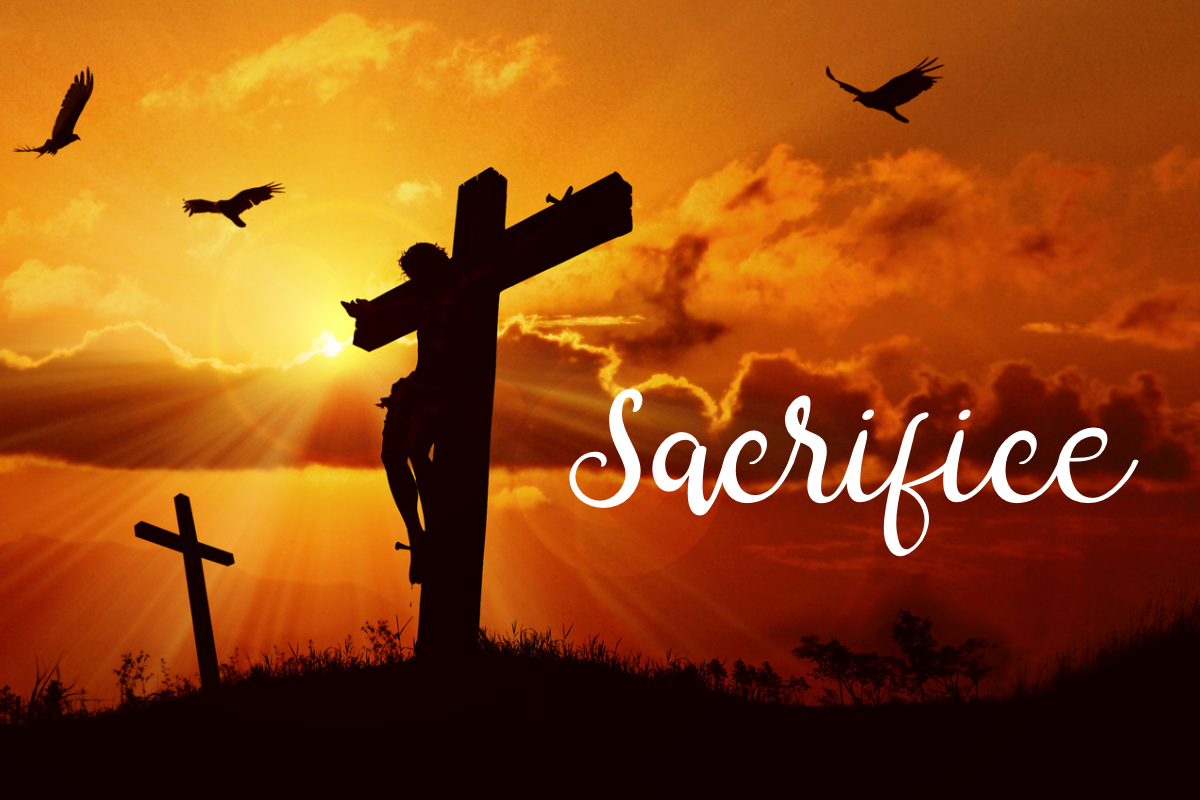
Offering sacrifices is a noble gesture that has a long history in a variety of cultures and religions as a way to help our deceased loved ones. By giving up something we value–such as time, money, or even comfort–we demonstrate our faith through our sincere offering to God. Our sacrifices honor the memories of those who have passed away and provide peace to those still alive.
In the Catholic tradition, performing acts of devotion in accordance with specific conditions can yield the spiritual reward of indulgences. The Catechism of the Catholic Church teaches us: “Through indulgences the faithful can obtain the remission of temporal punishment resulting from sin for themselves and also for the souls in Purgatory” (CCC 1498).
To acquire an indulgence, the Catholic faithful must first possess the necessary disposition of loving God, detesting sin, trusting in the merits of Christ, and believing firmly in the great assistance derived from the Communion of Saints. They must then perform the prescribed acts, which vary depending on the particular indulgence but typically consist of reciting prayers, reading scripture, accomplishing charitable works, adoring the Blessed Sacrament, or making a pilgrimage. Indulgences are also available on certain feast days, anniversaries, and jubilees. Other requirements include making a recent Confession, receiving the Holy Eucharist, praying for the Pope’s intentions, and prayerfully requesting the indulgence.
A plenary indulgence, which grants full remission of the temporal punishment, is obtained when the recipient meets all of the conditions while remaining completely detached from sin. Partial indulgences, which remit a portion of the temporal punishment, are gained when only part of the penance is completed or when the recipient is not in a pure state of grace. Even if we are not yet able to receive a full plenary indulgence, great value is obtained from seeking partial indulgences as we continue to pray for God’s help to perfect our disposition. Pope Saint Paul VI explains in his 1967 Indulgentiarum Doctrina:
“The aim pursued by ecclesiastical authority in granting indulgences is not only that of helping the faithful to expiate the punishment due sin but also that of urging them to perform works of piety, penitence and charity–particularly those which lead to growth in faith and which favor the common good. And if the faithful offer indulgences in suffrage for the dead, they cultivate charity in an excellent way and while raising their minds to heaven, they bring a wiser order into the things of this world.”
In addition to prayers and indulgences, we can “offer up” acts of self-denial, such as fasting or abstinence from something we enjoy. Additionally, we can offer all of our suffering, pain, frustrations, and inconveniences for the benefit of the holy souls in Purgatory.
Service can be a powerful source of solace and an on-going opportunity to create a living tribute for those who have gone before us. Consider volunteering in a capacity that may have benefitted your loved ones while they were on earth. Or, offer your talents to a cause they championed. Helping others helps us to shift the focus off of ourselves and to shine the light of Christ upon those who most need his blessings.
Providing physical or material assistance to those less fortunate than ourselves gives us an opportunity to correct injustices on behalf of our dearly departed who might not have been able to complete charitable acts prior to bodily death. We can make monetary gifts in the names of our loved ones, recognizing that “almsgiving saves from death, and purges all sin” (Tobit 12:9).
Another way to right injustices is to ask for forgiveness from those who have died that you may have wronged. Likewise, you can offer your forgiveness to those who have died that have offended you. This heartfelt exchange re-establishes peace in the universal order and promotes purification and enlightenment for you and the departed.
This week, consider how the habit of offering your trials and good works can aid the souls of others. During this final week of Advent, pick a small penance that you can sacrifice for the holy souls and possibly seek an indulgence for someone in Purgatory.